
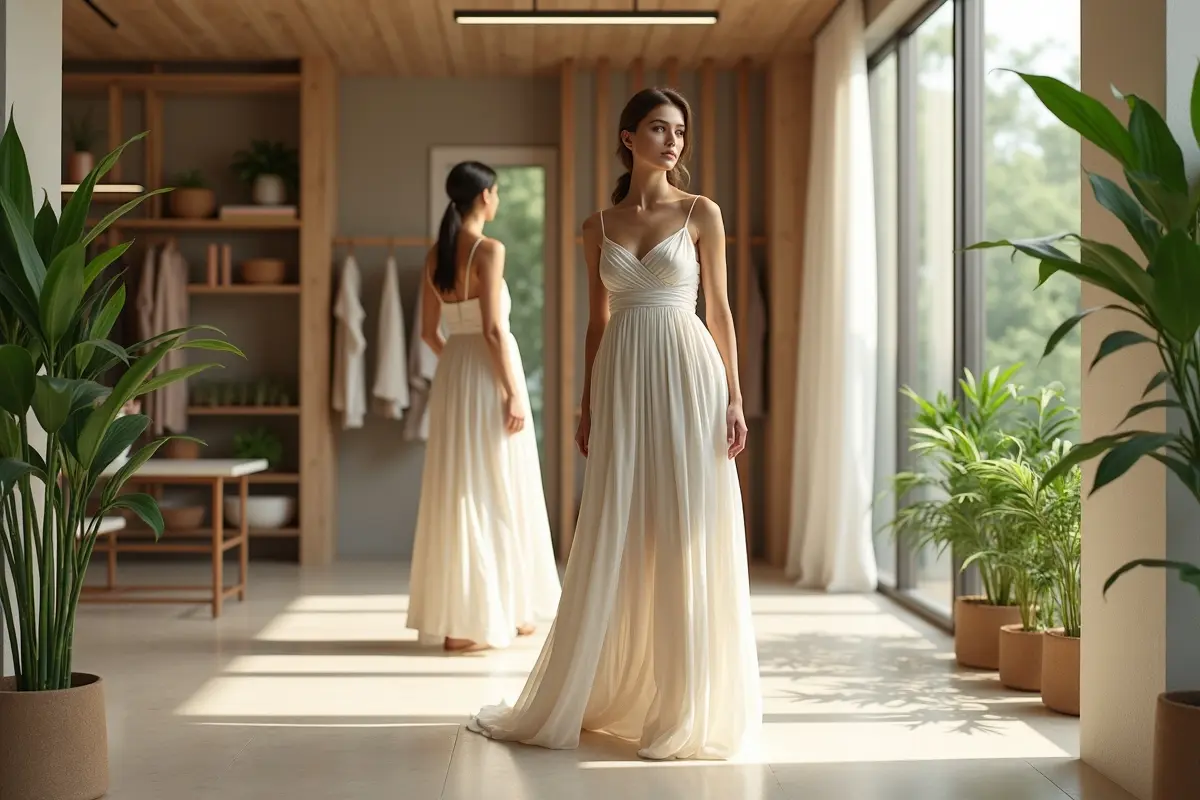
The shift of fashion around bamboo apparels has become a critical mention for conscious fashionistas as the world is currently navigating an eco-wakening.” As we move deeper into 2026, the global demand for bamboo textiles is growing at over 15% annually, shifting from a niche “eco-alternative” to a mainstream performance standard.
Bio-Performance Textiles: When Clothing Starts Doing Its Job
Boutique apparel doesn’t behave like fabric in the traditional sense. It behaves like a system. And that distinction matters. Bamboo Clothing actively moves moisture away from the body; unlike cotton which soak up sweat and staying damp. Bamboo fabric fibres contain natural micro-channels that work constantly—no coatings, no chemical “performance finishes” that wash out after ten cycles.
What that means in real life:
- You don’t feel sticky halfway through the day
- Your body temperature stops swinging wildly between spaces
- The garment works whether you’re sitting, moving, or doing nothing at all
This is clothing that doesn’t need to be managed. It quietly keeps up with you. Once you experience that, going back to passive fabrics feels like regression. However, always look for global “safety stamp” certification standards that guarantees the fabric is free from harmful chemical residues.
Quiet Luxury and Functional Versatility
Boutique bamboo fits naturally into the global shift toward quiet luxury—pieces that perform across contexts without announcing themselves.
A well-cut men’s bamboo shirt or dress transitions seamlessly:
- From home to work
- From travel to social settings
- From summer heat to layered winter wear
Its anti-static behaviour prevents clinging, maintaining structure even in synthetic environments like offices and transport. Bamboo fabric presents a structural paradox in that the fabric provides the visual “crispness” of high-end tailoring without the physical “restriction” of traditional fabrics. That results to a visually clean and non-irritating wear throughout the day. This versatility supports a smarter wardrobe.
Molecular Comfort: Why Your Skin Finally Calms Down With Bamboo Fabric
Most people describe comfort emotionally, but the body experiences it physically—at a microscopic level. Bamboo fibres are naturally round and smooth. Cotton fibres are not. Wool fibres definitely aren’t. That difference sounds minor until you wear something for ten hours straight.
Rough or irregular fibres create constant low-grade irritation that your nervous system never fully switches off from. Bamboo removes that background friction.
This is why it resonates so strongly with:
- People with sensitive or reactive skin
- Anyone who travels or wears one outfit all day
- Those who don’t want to think about what they’re wearing
Unlike most materials that rely on synthetic finish, the comfort your get from bamboo apparel is inbuilt in its molecular integrity. That means the comfort doesn’t fade and you can’t ignore the feel.
Atmospheric Control: The End of “Just Wash It Again”
Synthetic performance wear masks odour with chemistry. Bamboo prevents it biologically. The fibre contains Bamboo Kun, a natural bio-agent that inhibits bacterial growth. Pair that with bamboo’s ability to keep skin dry, and you get a fabric environment where odour simply doesn’t establish itself.
The payoff is practical:
- Clothes stay wearable longer
- Washing becomes less frequent, less aggressive
- Fabric integrity lasts instead of breaking down
This isn’t about hygiene theatre. It’s about reducing the daily friction between living and maintaining your wardrobe—something anyone with a full calendar instantly understands.
Regenerative Material Logic: Fashion beyond “Less Harm”
Sustainability in fashion often stops at reduction—less water, fewer chemicals, and smaller footprints. Boutique Most “sustainable” fashion is about doing less damage. Bamboo operates on a different principle altogether.
It grows fast, without irrigation, without pesticides, and regenerates from its own root system. Entire groves actively improve soil health while absorbing more carbon than equivalent tree plantations.
Why this matters to the wearer:
- The environmental benefit is structural, not offset-based
- Material choice directly supports regenerative agriculture
- Longevity reduces replacement cycles and waste streams
This reframes purchase decisions. You’re no longer choosing between ethics and performance. The material excels precisely because it’s aligned with natural systems, not in spite of them.
Cultural Semantics: From Pattern to Meaning
Modern luxury is increasingly defined by meaning, not excess. Luxury is shifting. Loud branding is aging badly. Meaning is what lasts. The physical properties of bamboo change the way we “read” art on clothing.
For example, when Indigenous Dreaming artworks are translated onto bamboo fabric, the result language in a fulfiling pattern. The fabric’s natural drape and subtle sheen amplify colour depth, allowing complex patterns to breathe rather than sit flat.
This creates a different relationship between wearer and garment:
- The design carries narrative, not trend cycles
- Value is cultural and intellectual, not just aesthetic
- Wearing becomes participation, not consumption
That changes your psychological relationship with the item; you align with the value of lifecycle integrity.
Life-Cycle Economics: Cost, Longevity, and Value Retention
When you stop shopping by price tag and start thinking in life-cycle terms, bamboo pulls ahead quickly.
Over time:
- Fewer washes mean lower energy and water use
- Fibres maintain strength and colour across years, not seasons
- Fit and comfort remain consistent, reducing replacement impulse
For homeowners, investors, and professionals already thinking in terms of long-term asset performance, this logic feels familiar. You’re not buying fashion—you’re specifying a component of your daily environment.
The “Value Alignment” Effect
In the modern world, what we wear is a “signal” to ourselves and others.
The Logic: By wearing a garment that honors its creation and disposal, you are signaling Systemic Thinking.
The Result: You are telling self and the world that you value credibility of wearable architecture; the idea of injecting fashion with a sense of permanence, structural ingenuity, and a deeper purpose beyond mere commercialism and transient trends.
In essence, the move to boutique bamboo is a strategic upgrade for the entire fashion ecosystem. It provides models with biological performance (cooling/luster), enthusiasts with conscious luxury (longevity/semantics), and the general industry with a scalable solution to the climate crisis. It is the transition from ‘Apparel as a Disposable Commodity’ to ‘Bamboo Apparel as a Regenerative Asset Mindset.’